Follow us on:

Sårt Fl#de


Our Rating: 3.81 / 5
Sårt Fløde is a 12% imperial double-mash coffee vanilla stout from Herodes Bryghus, brewed at Amager Bryghus. Opaque, creamy, and aromatically inviting, it delivers latte-like sweetness overlaid an intense burnt roast. Alcohol stays impressively restrained. Warming briefly reveals balance before scorched coffee reasserts itself, making this a powerful, demanding stout with a narrow comfort zone overall.

Beer Name: Sårt Fl#de
Brewery: Herodes Bryghus (brewed at Amager Bryghus)
Beer Style: Imperial Stout (Coffee & Vanilla / Imperial Double Mash Stout)
Alcohol: 12.0%
Taste Notes: Burnt caramel, scorched coffee, dark malt syrup, vanilla, creamy
Serving: Bottle
Serving Size: 330 ml (11.2 fl. oz.)
Black Cream
Sårt Fløde is a 12% imperial double mash coffee vanilla stout from Herodes Bryghus (Herodes Brewhouse), brewed at/by Amager Bryghus, bottled in 330 ml, with a suggested serving range of 9–13 °C printed right on the label, lovely. The label is quite forthcoming and direct: alcohol is clearly stated, the double mash is named outright, and both coffee and vanilla are declared. It pretty much lines up the the name Sårt Fl#de (a play on the Danish Sort Fløde), which translates into Black Cream. What it does not include is detail on coffee origin, roast level, timing of addition, or vanilla format. That absence we’ll get back to later. For now, onto the initial impressions.
In the glass at the low end of the suggested range, it pours fully opaque black with a brown head that rises eagerly, then thins and settles fast into a persistent collar. Carbonation is visibly present at the surface, more active than expected for the style, and the beer leaves slow, sticky sheets rather than defined lacing when the glass is turned and swirled in hand.
Aroma is where the beer immediately finds common ground at the table. We get burnt dark caramel, deep-roasted coffee, malty sweetness, and a soft dairy-like note that reads convincingly as latte foam. The vanilla shows as roundness and sweetness rather than extract-like aroma, and the alcohol stays tucked away, even with a deliberate sniff.
First sip is a bit more divisive around our table. The opening carries a sharp, almost sour-leaning edge that quickly resolves into heavy roast: char, scorched sugar, bitter coffee grounds. That bitterness sits high and stays firm through the mid-palate, with sweetness present but partially masked. The mouthfeel is creamy and smooth without being thick, and again the alcohol notes remain remarkably restrained for 12%. At this stage, the beer presents as technically impressive in strength management, but assertive, bordering on abrasive, in how hard it leans on burnt roast as its primary flavour driver.
Who Scorched My Coffee?
As the beer warms past the initial pour at 9C, we notice a small but important shift. The sharp edge softens, and the palate opens enough to let the malt sweetness register as something more than just structural sugar. Caramel moves from scorched to darkly cooked, and the coffee briefly shows actual bean character before the burnt notes reclaim the finish. This window is short, but for some of us it’s enough to reframe the beer as intense rather than only harsh.
Carbonation plays a larger role than we expected would have predicted from this style of beer normally.

Despite the beer’s weight and strength, the bubbles stay fine and active, lifting aroma and sharpening the roast bitterness. That gives the stout a creamy texture on the tongue while still driving a pointed, drying finish. For drinkers who enjoy aggressive roast and clear bitterness, this reads as definition and clarity. For others, it will tip into fatigue by the back half of the glass.
The coffee character is central to how the beer is received. Without information on origin or roast, we can only report what’s in the glass: it sits way past dark roast and into scorched territory, contributing both bitterness and that early sour-leaning impression. Those who drink Italian Roast coffee (the roast level, not the origin) will find themselves right at home. Some of us don’t, though. The vanilla remains subtle throughout, never sweetening the beer outright, but smoothing edges where it can. Alcohol warmth stays low even as temperature rises, which several of us read as a genuine technical achievement.
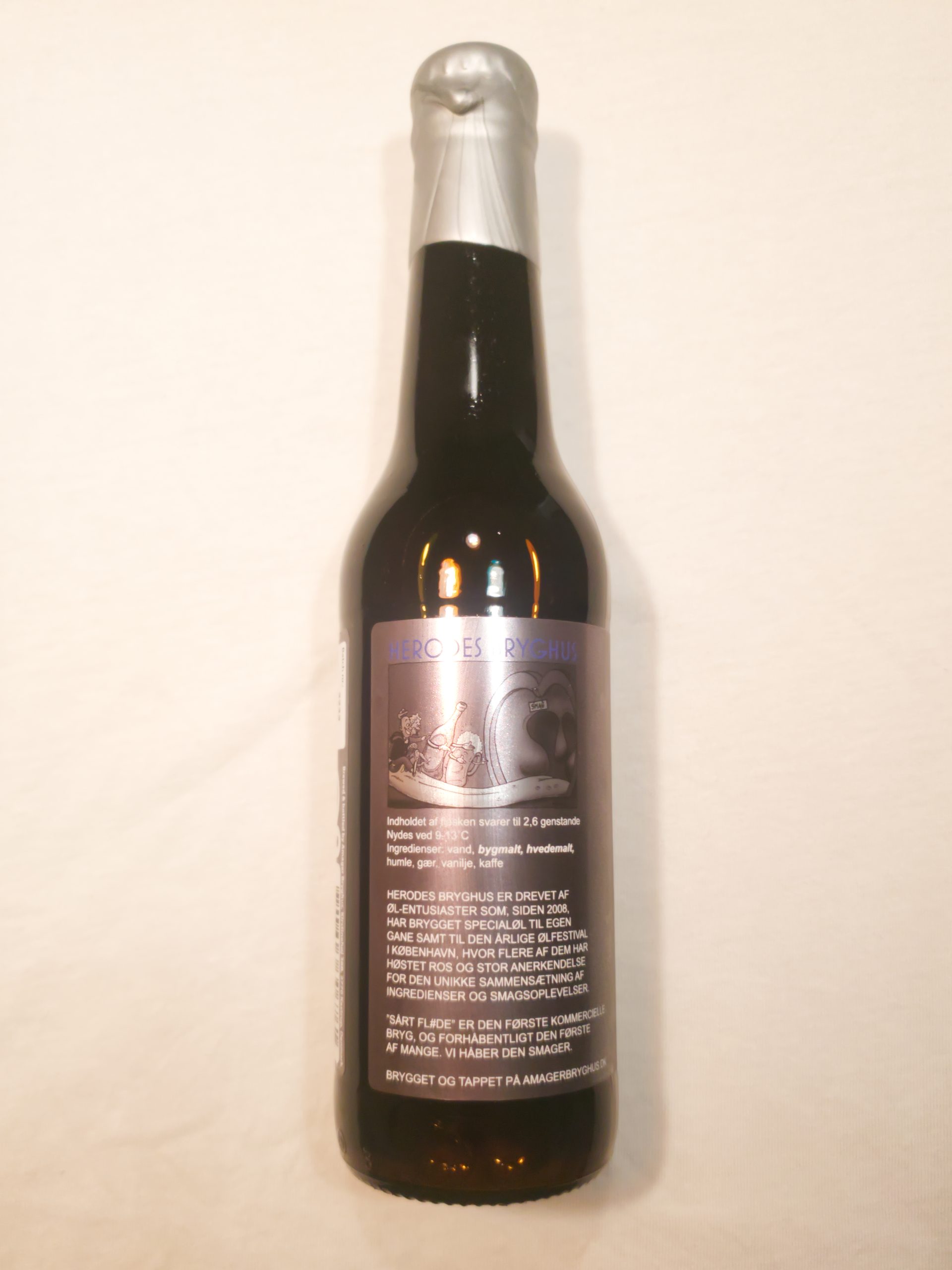
Against BJCP 2021, the closest reference point is 20C Imperial Stout. Sårt Fløde aligns on strength, colour, and intensity, and it clearly intends a coffee-forward expression. Where it diverges is integration: the roast bitterness dominates for most of the pour, and the balance only briefly comes together as the beer warms.
Untappd currently sits around a 3.87 average. Our own impressions land in that same territory, with agreement on the beer’s power, control of alcohol, and aromatic appeal, and divergence on how forgiving the burnt-coffee profile feels over a full serving.

In the end, Sårt Fl#de reads as a beer with a high ceiling and a narrower comfort zone. When approached warm, slowly, and by drinkers who enjoy assertive roast and bitterness, it delivers depth, strength without heat, and a clearly intentional flavour direction. For others, the scorched edge never fully lets go, keeping the experience impressive but demandingly unpleasant at the same time. That tension, between control and aggression, smoothness and burn, is exactly what stretches the scores across that half-point band, and it’s honest to what ends up in the glass.
- Viktor: 3.50 / 5
- Casper: 3.75 / 5
- Jesper: 4.00 / 5
- Laurits: 4.00 / 5
Our Average Score: 3.81 / 5