Follow us on:

Samichlaus Helles
Viktor B., Jesper K. and Laurits S.


Our Rating: 3.25 / 5
Samichlaus Helles is a once-a-year heavyweight: sweet, spirit-forward, and stylistically adrift. Honey-like malt sweetness and toffee show early promise, but warmth narrows it to sugar and booze.
Fascinating tradition with a slightly awkward execution. Somewhere between barley wine, malt liquor, and myth, it’s memorable more for presence than for finesse.
Beer Name: Samichlaus Helles
Brewery: Schloss Eggenberg
Beer Style: Malt Liquor / Helles Wine (Barley Wine, according to Schloss Eggenberg)
Alcohol: 14%
Taste notes: Malty, honey, apple juice, mead-like
Serving: Bottle
Serving Size: 330ml (11.16 fl. oz.)
The Seasonal Heavyweight
There are Christmas beers, and then there’s Samichlaus. Where most breweries tuck cinnamon sticks and orange peel into a brown ale and call it festive, Schloss Eggenberg goes straight for the knockout punch: one brew day a year, bottled down for December, and a label that whispers nothing more than 14%. It’s less holiday cheer, more holiday dare.
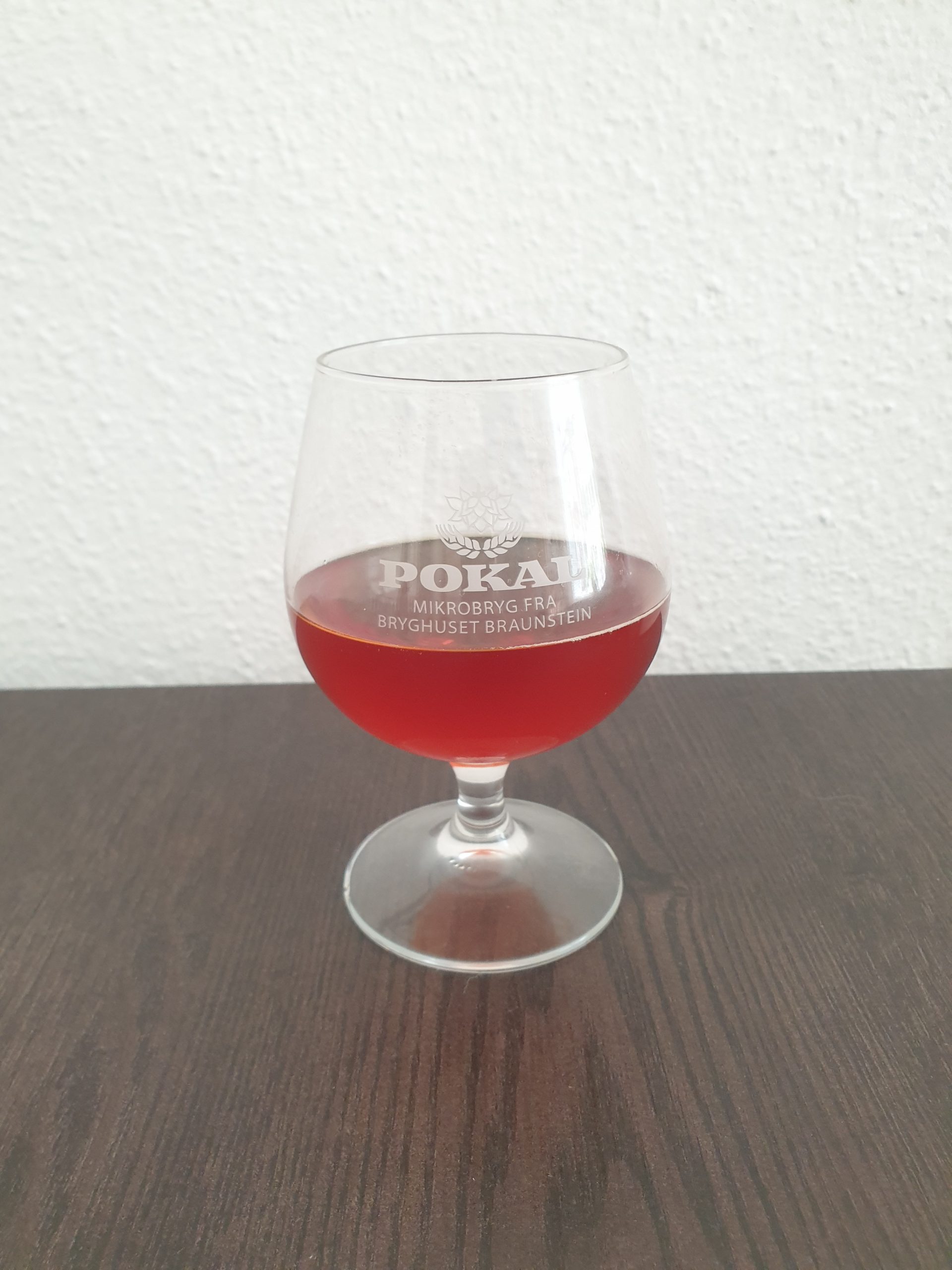
Three bottles, three tulip glasses, poured at 8 °C with deliberate slowness. In the glass: red caramel glow with copper edges almost edging on an orange hue, and medium clarity that catches the light but never quite shines. No foam, no lacing, just a flat surface that looks more like fortified wine than Helles. Carbonation drifts up in lazy streams, medium-low, not nearly enough to suggest energy. The beer sits heavy and unfazed.
The aroma moves plenty, though. First wave of candied apple, honey, something mead-like with an almost faint booziness following through. Pulling closer, and alcohol leaps from the glass, raw and insistent, ripping through the aroma and overwhelming the nose. Even from a distance, the bouquet stings enough to perfume the table. It’s a loud nose but not layered, more like a shout to be heard than a conversation to be had.
Already the character is set: Samichlaus Helles isn’t here to blend into the background. It’s a centrepiece. Not a holiday companion for chatter, but a seasonal heavyweight that demands full attention, whether you’re in the mood or not – but hopefully you are.
A Pale Barley Wine?
First sip, and the brewery’s notes ring partly true. Pale Pilsner malt does give candy sweetness, toffee edges, and even flashes of orchard fruit. First sit revealed intense caramel, apple juice, and honey, followed by an intense malt sweetness combined with the fruit and honey notes, presenting itself as mead-like.
But execution matters: sweetness floods fast, coating tongue and teeth in a sticky film, and the alcohol underneath never hides. Mouthfeel is thin in weight yet strangely enveloping, like sugar water laced with spirit. Bitterness is a long-gone friend, and a faint whisper at best.
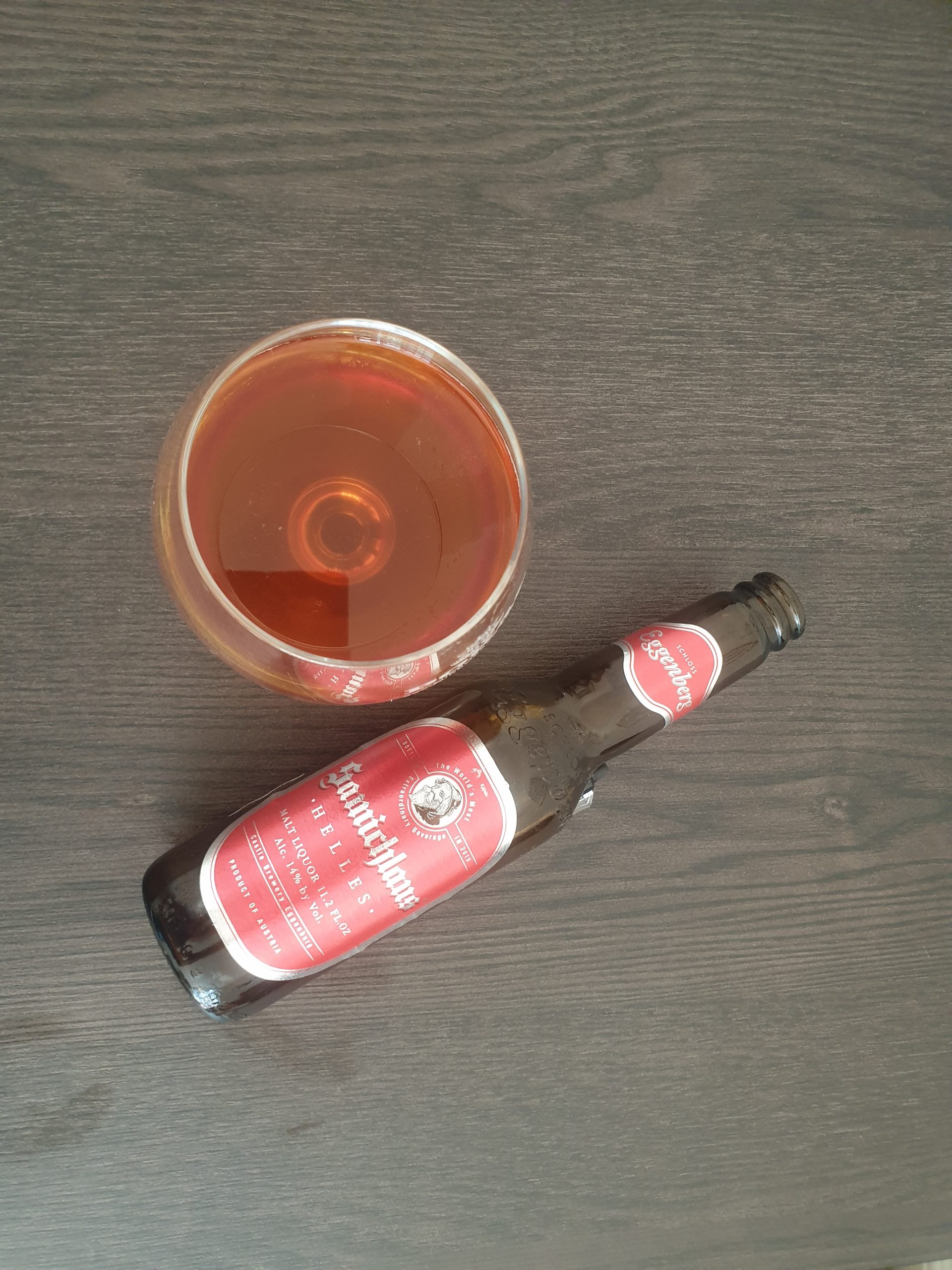
By mid-glass, the fruit recedes, leaving sugar as the sole driver. Caramelised, heavy, and hot. With each sip, the Samichlaus Helles got warmer, and the ethanol sharpened; sweetness became cloying, the beer collapsing into monotony. Without head or carbonation to cleanse, every sip stacks on the last until the finish is only honey, malt sweetness and spirit burn. What the brewery calls “rich and complex” becomes blunt and bombastic.
And then there’s the style question, the one that nags harder than the alcohol heat – at least for us. Eggenberg markets this as a single malt barley wine, brewed entirely from pale Austrian Pilsner malt and fermented with lager yeast. Technically, the strength qualifies, but stylistically? Barley wines are ales, layered with ester character and malt depth beyond simple sugar. This has none of that. Calling a 14% Pilsner-malt helles a barley wine feels less like tradition and more like branding.
UnTappd, for its part, settles on Malt Liquor – an inelegant but not inaccurate denotation for a beer this hot, sweet, and unruly. We, half-jokingly, tossed Imperial Helles, Helles Wine and Hell’s Wine around the table, and truth be told: it is essentially a Helles stretched to absurdity. None of these categories fit neatly, but perhaps that’s the point. Samichlaus Helles lives in stylistic limbo, not because it’s innovative, but maybe because it never aimed at balance in the first place.
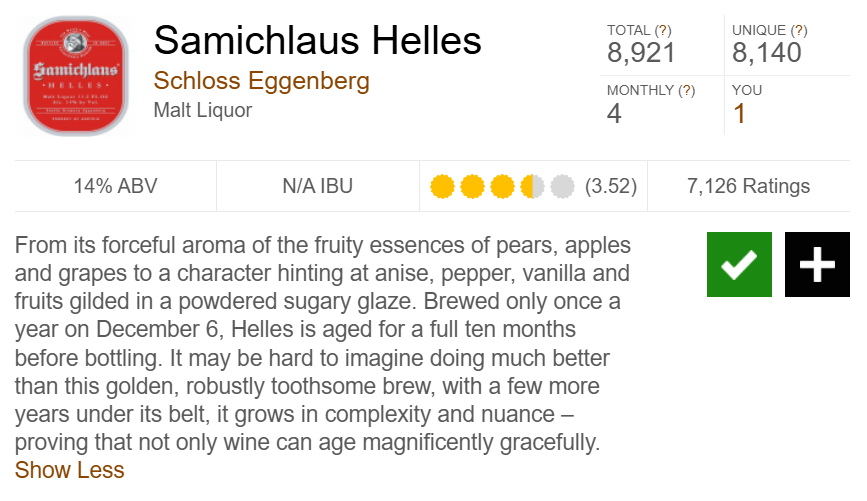
- Picture from Untappd.com
Temperature rise does nothing to redeem it. Sweetness grows syrupy, alcohol edges toward nail polish solvent (without overstepping into fusels), and balance slips further out of reach. Where many strong beers open up with time, this one shuts down, stripping itself of nuance until only sugar and heat remain. By the final third, finishing the glass felt more like a duty than an indulgence.
And yet, despite all negatives, there’s fascination here. A beer brewed once a year, with decades of myth attached, is a somewhat rare thing in this age of pumping out IPAs left and right, pastry sours galore, and barrel-aged stouts hitting mainstream. For enthusiasts, the story may be worth the pour. But story isn’t flavour, and novelty doesn’t equal quality. Packaging offers no technical transparency, price sits firmly in “curiosity premium,” and the experience leaves more analysis than pleasure.
But it isn’t all misfires. There are moments where the beer shows its merit: the honeyed apple and toffee sweetness on first pour is inviting, almost luxurious, even at 14%. For all its cloying weight, it never tips into fusel harshness, and there’s a certain charm in how unashamedly it leans into malt sweetness without distractions of oak, spice, or hop showboating. It is, if nothing else, honest in its construction: one malt, one vision, once a year, executed with conviction. In that narrow frame, it delivers exactly what it sets out to be.
Consensus around the table: Samichlaus Helles is remarkable to encounter once, not to revisit. Interesting as an artefact, clumsy as a drink – and we advise sharing a bottle instead of getting one each.
Rating: 3.25 / 5