Follow us on:

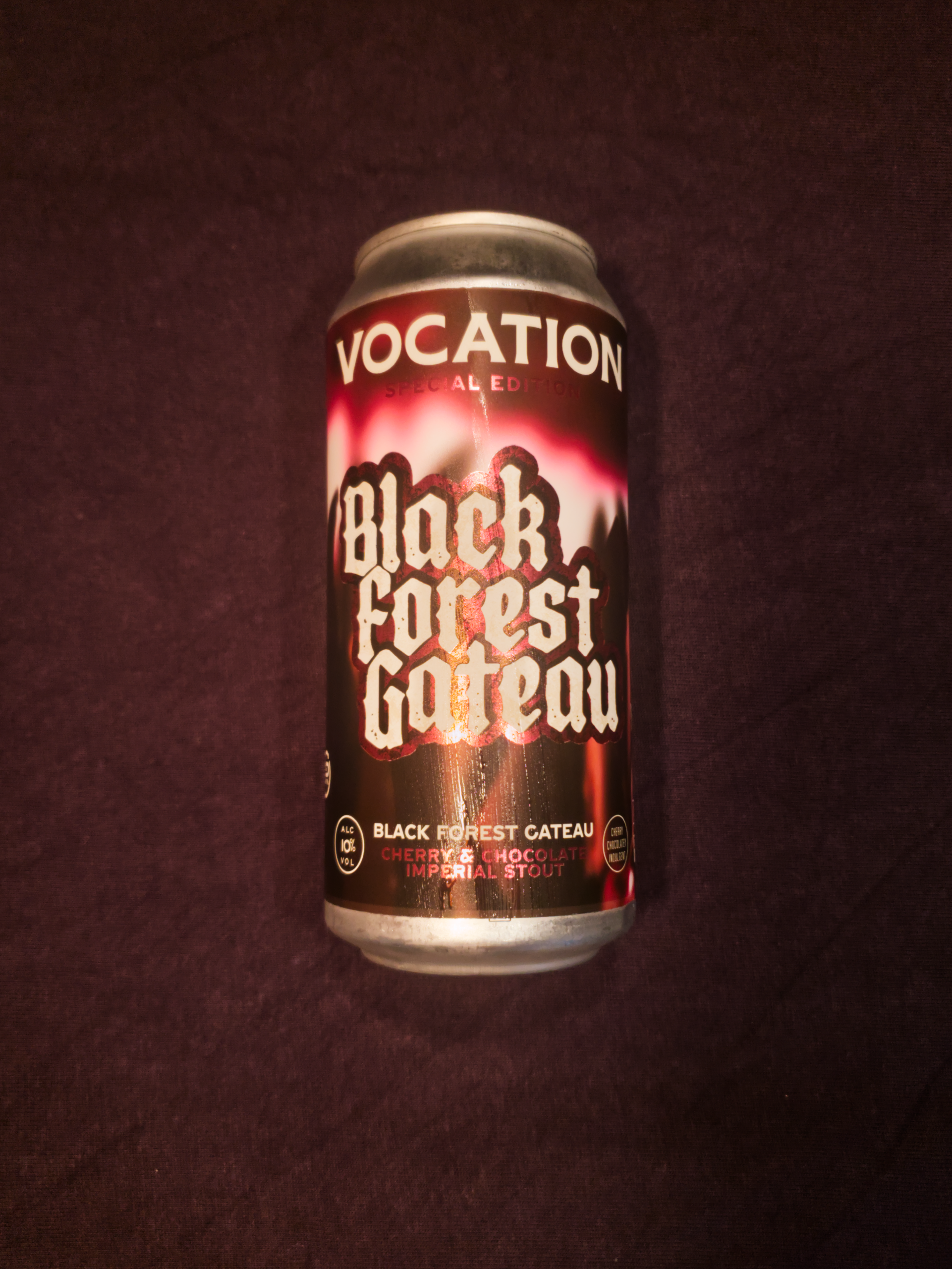
Black Forest Gateau

Our Rating: 3.75 / 5
A rich, cherry-forward imperial stout with excellent viscosity and a clean tart–sweet balance, but lacking the chocolate depth its name promises. Well-constructed without lactose, though a metallic edge from dark malts intrudes as it warms. Enjoyable overall, but more cherry dessert than true Black Forest Gateau.
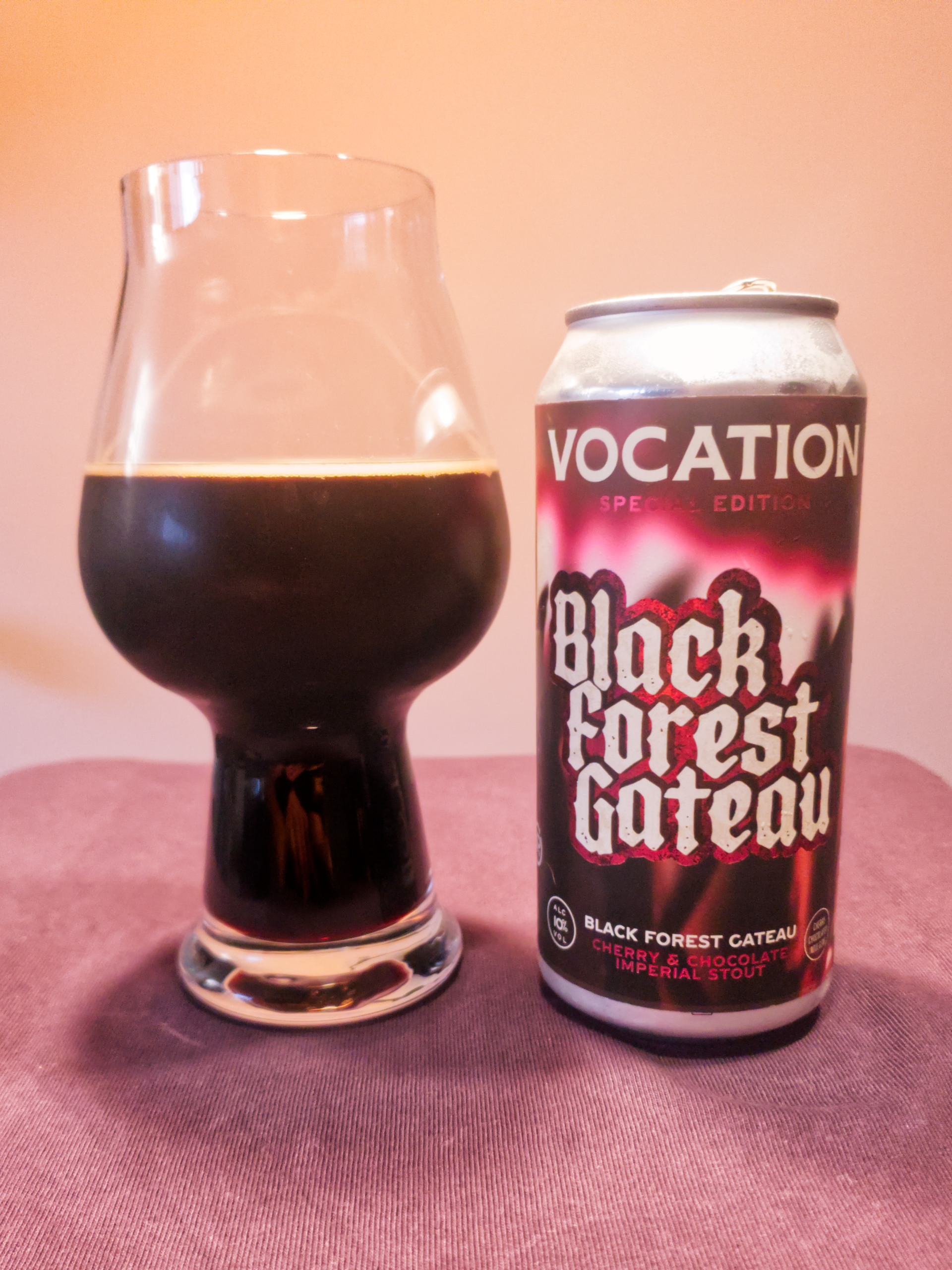
Beer Name: Black Forest Gateau
Brewery: Vocation Brewery
Beer Style: Cherry Chocolate Imperial Stout (Imperial Stout)
Alcohol: 10.0%
Taste notes: Tart cherry, cherry syrup, baker’s chocolate, roasted caramel, malty, viscous
Serving: Can
Serving Size: 440ml (14.88 fl. oz.)
A Dessert Idea, Reimagined
There are beers where you sit down with a rough expectation before the first sip, and this is unavoidably one of them. Calling something Black Forest Gateau isn’t exactly subtle. It primes you for a specific interplay: cherry tartness, chocolate depth, a little cream-like softness, and enough structure to keep the whole thing from collapsing into pastry slush, unless it’s stated as being a pastry stout. Vocation clearly leans into that frame, describing this as a “Cherry Chocolate Indulgent” stout, “dark,” “devilishly wicked,” and “unexpected.” So, there’s no need for theatrics to set the scene, only the usual curiosity about how those claims hold when the beer is poured.
At 8°C in a Birrateque Stout glass, the pour settles into something extremely dark but not flatly black. There’s a faint red–purple halo at the edges of the glass, only noticeable when the glass is angled against the light. The head is minimal, more of a tight ring than a cap, but consistent enough that you don’t worry about it being a flat experience. Carbonation looks practically absent unless looking around the edges of where the glass meets the beer’s cap, though that’s normal for the style; an imperial stout at 10% isn’t meant to be sparkling. The lacing clings in thick sheets, persistent and almost sliding into syrupy territory, a detail that already hints at the beer’s texture before I tasted it.
A quick pass over the aroma brings an unmistakable blast of cherry syrup, very amarena-like. Not artificial at all, but rich, thick, and sticky-sweet in its profile. Beneath that sits some baker’s chocolate and a little caramel roast. As the glass sits and warms, the cherry dominates even more, pushing the chocolate into the background. It’s not strong enough to fill the room; it’s more of a concentrated aroma that rewards some close proximity. Once I lean back, it’s gone. Some beers breathe aggressively, but this one saves its intensity for when you’re actually engaging with it.
The first sip confirms that the cherry isn’t just an aromatic flourish. It’s right there up front: tart enough to keep you awake, sweet enough to hold onto the “dessert” promise without drifting toward anything sour-adjacent. The body is thick and viscous, but in a way that feels earned rather than engineered. There’s no lactose listed, so the creaminess likely comes from a high final gravity paired with liberal use of oats. The base stout itself is sweet and firmly built, with a quick spike of bitterness right after the cherry. It’s a sharp bitterness, the kind you sometimes get from darker crystal malts or roast barley rather than hops. On this occasions, the sharpness even carries a slightly metallic edge, that I find sort of pierce through the otherwise indulgent profile.
As the beer warms, the dynamic shifts predictably. The tartness softens a bit, and the sweetness expands. The beer leans harder into a sweet-cherry-and-roast combination. Oddly enough though, the chocolate doesn’t deepen with temperature; if anything, it retreats further. The warming also highlights that metallic ping. It doesn’t ruin the beer too much, but it’s noticeable enough for me to shift my attention every time I take a sip.
Despite that quirk, it’s an otherwise engaging stout. Thick without being sludge. Sweet without being overwhelmingly dessert-like, and tart enough to stay lively. And yet, based on the name and the can’s confident claims, I can’t help looking for more chocolate. I imagine cacao nibs or chocolate malts could give this a darker, richer backbone, something to complement the cherry rather than let it take full control; heck even chocolate aroma could bring that fondant cake-like element that the cherries need to dance. As it stands, this rendition of “Black Forest Gateau” comes across more as a cherry-first dessert stout with roast accents, rather than a true recreation of the cake’s chocolate-dominant core.
Be There Chocolate in This Cake?
The technical construction here I think is worth unpacking, because the beer lands in an interesting hybrid territory between classic imperial stout expectations and modern dessert-stout tendencies, without quite surrendering to either. At 10% ABV, it fits comfortably within imperial stout strength, and the visual cues match: opaque, dense, slow-moving legs on the glass, and a subdued carbonation. If you were judging purely by the BJCP Imperial Stout (20C) style guideline, the beer clears several checkpoints: dark colour, full body, pronounced roast, and elevated alcohol presence without hotness. Where it diverges is in its flavour weighting.
A traditional imperial stout usually leans on roast, coffee, cocoa, molasses, and subtle dark-fruit, not a large cherry-forward profile. Here, cherry sits in the driver’s seat comfortably.
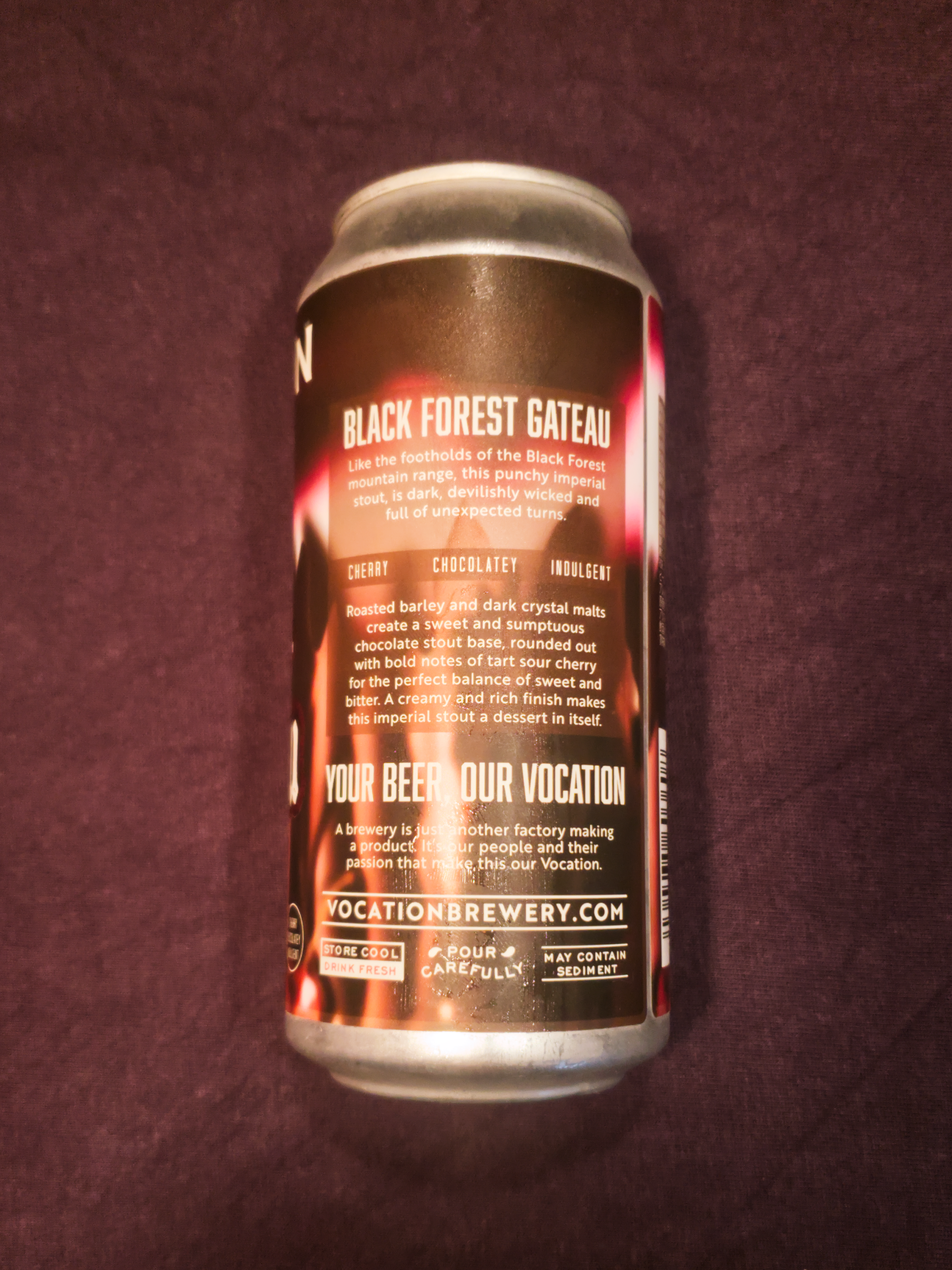
From a formulation perspective, the cherry execution is clean, no off-notes to speak of and no cough-syrup volatility, nor over-fermented fruit character. That suggests, to me, a restrained use of actual cherry or cherry concentrate, not artificial concentrates or aromatics. The metallic sharpness I pick up is more likely tied to the malt bill. The can mentions roasted barley and dark crystal malts, which makes sense: roasted barley often brings a dry, sharp roast edge, while certain semi-high-Lovibond crystals I find can contribute a burnt-sugar acidity that sometimes registers as metallic or tinny on my palette.
I’ve tasted this profile before in stouts that over-rely on crystal malts to deliver “dark sweetness,” and it can quickly overshadow more delicate chocolate notes.
The missing chocolate dimension is the beer’s most significant structural gap. The can promises an indulgent chocolate stout base, but in the glass you get more generic roast than specific chocolate. Bakers’ chocolate appears briefly in the aroma, but doesn’t settle into the flavour as firmly as I Expected. Chocolate wheat, cacao nibs, or even a blend of mid-range roast malts could have pushed this toward truer cake territory. As it stands, the cherry does most of the heavy lifting, and the roast bitterness becomes the balancing force, functional, but not aligned with the dessert they’re referencing. However, applause where it warranted, I am very impressed with the dessert-like state of the beer and how they achieved it without lactose. It reaffirms to me, that pastry-like results can be achieved, without needing lots of unfermentable sugars and milky taste notes.
Carbonation is appropriately low for the style, and you can tell it’s been kept intentionally suppressed. With this much sweetness, body, and fruit character, a higher carbonation would have risked turning the flavour into something reminiscent of a cherry cola, especially given the caramelised sugar notes from the crystal malts. The creamy texture, reached without lactose, is, again, commendable. Many breweries simply default to lactose for mouthfeel; hitting this level of viscosity through process, mash profile, and adjunct grains shows more intention.
Temperature plays a decisive role. I usually advocate for warmer serving temperatures when dealing with imperial stouts, the complexity generally blooms as the beer opens. Here, I think that rule of thumb and logic bends. Warmer temperatures expose more sweetness without delivering more depth. Instead, that shift uncover the metallic edge more clearly and magnify the cherry syrup perception. At colder temperatures, the beer feels more cohesive; the tart cherry has its original tart snap, the roast reins everything in, and the sharper notes stay tucked away. It’s rare for an imperial stout of this type to peak on the colder side, but this one genuinely does.
Comparing this beer to the BJCP style anchors gives a clear read: this isn’t built to be a classic imperial stout. It’s closer to a flavoured stout under the broad umbrella of Spiced, Specialty, or Dessert-stouts. And that’s fine, you don’t drink for the style as long as the beer is good. But style frameworks at least explain why certain things feel slightly misaligned. The cherry works. The viscosity works. The sweetness works. The roast balance mostly works. What’s missing is the chocolate component that would tie the concept together and fulfill the central promise.
Untappd’s aggregate rating hovers higher than where I land, at 3.93/5. It’s understandable why though: the beer delivers a bold, clear flavour punch, and I figure that many drinkers evaluate flavoured stouts primarily through intensity. A big cherry hit plus a thick 10% stout reads as “mission accomplished” for a lot of people, at least that’s my experience.

This is not meant to roast people that enjoy big, bold and black liquids, no pun intended. But tasting it with a more ingredient-attentive lens, I find the gaps become more obvious. The metallic note may fly under the radar, and the missing chocolate might not bother those who simply like cherry-forward stouts. But when the beer claims “Black Forest Gateau,” chocolate isn’t optional, it’s structural and mandatory in my book. This is not simply about holding the beer against a pedantic standard; it’s about holding it against its own label and promises.
Still, the execution avoids the common pitfalls of pastry-adjacent imperial stouts: no cloying lactose sludge, no fake dessert aromatics, no syrupy artificial sheen. It drinks like a thoughtfully assembled stout with a strong cherry theme, not a sugar bomb. That restraint gives it credibility even with its shortcomings. And while the beer settles around a 3.75 for me, below its Untappd average, it earns that score honestly: solid, enjoyable, but not fully delivering the cake it promises, that could have taken Vocation’s Black Forest Gateau from very good to great.
Rating: 3.75 / 5